Industrial Development, Urban Heritage, and Place Identity: A Comparative Conceptual Framework for Shanghai Pudong and Faisalabad’s Allama Iqbal Industrial City
DOI:
https://doi.org/10.68024/tk64aw96Keywords:
special economic zones, urban heritage, place identity, industrial urbanization, PudongAbstract
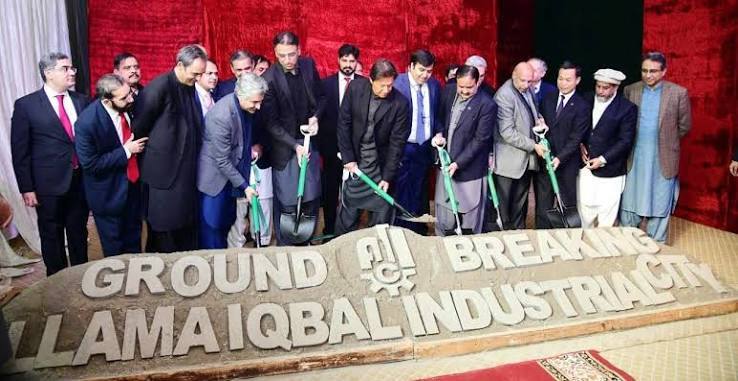
Development of industrial parks under Special Economic Zones (SEZ) proved as a steppingstone in the economic growth of China. The rapid modernization and international influence within these zones raise concerns about preserving the unique cultural and historical identity of China. This article develops a comparative conceptual framework linking industrial-zone development to spatial transformation, tangible and intangible heritage, community attachment, and heritage-sensitive planning. The research is based on Shanghai Pudong New Area and the urban-industrial interface associated with Allama Iqbal Industrial City near Faisalabad, Pakistan, as deliberately contrasting cases yet connecting through CPEC. Five interrelated dimensions are proposed for subsequent assessment: land-use and urban-form change, historic fabric and industrial heritage, cultural practices, governance and participation, and heritage-led visitor connectivity. The paper argues that SEZ planning should assess cultural continuity alongside economic performance and proposes a phased assessment and policy framework adaptable to different institutional contexts. Its contribution is an explicit analytical bridge between SEZ-led urbanization and heritage/place-identity scholarship, together with testable propositions for future empirical comparison.
Downloads
Published
Issue
Section
License
Copyright (c) 2026 Naubada Ali (Corresponding Author), Farrah Khurram, Fatima Sher (Author)

This work is licensed under a Creative Commons Attribution 4.0 International License.
Articles published in this journal are licensed under the Creative Commons Attribution 4.0 International License (CC BY 4.0). This license permits others to share, copy, redistribute, adapt, remix, transform, and build upon the material for any purpose, including commercial purposes, provided that appropriate credit is given to the original author(s), a link to the license is provided, and any changes made are indicated.
Authors retain copyright of their work and grant the journal the right of first publication. The full terms of the Creative Commons Attribution 4.0 International License are available at https://creativecommons.org/licenses/by/4.0/.