Elegy for a Dying Order: Narrative Form and Historical Consciousness in Lampedusa’s The Leopard
DOI:
https://doi.org/10.68024/dpsj4643Keywords:
Narrative form, historical consciousness, emplotment, time, , memoryAbstract
This paper explores the aesthetic and structural brilliance of Giuseppe Tomasi di Lampedusa’s The Leopard (1958), with particular attention to its unique narrative form, historical context, and the philosophical resonance of its central character, Don Fabrizio. The novel’s fragmented chronology, tableau-style chapters, and reflective tone subvert conventional plot-driven storytelling, offering instead a deeply textured portrait of a society in transition during Italy’s Risorgimento. Drawing on Paul Ricoeur’s theory of narrative temporality, this study interprets the novel as a work that transforms historical time into human time through the mediating function of narrative. Rather than presenting history as linear progress, Lampedusa configures it as a series of reflective, sensorially rich tableaux that foreground memory, resignation, and the dissolution of aristocratic identity. Through Ricoeur’s concepts of emplotment and the narrative self, the paper argues that The Leopard is less a conventional historical novel and more a lyrical meditation on mortality, cultural memory, and the ethical significance of storytelling. The novel's enduring power lies in its capacity to evoke a vanishing world through narrative forms that mirror the fragmentation and refiguration of time itself.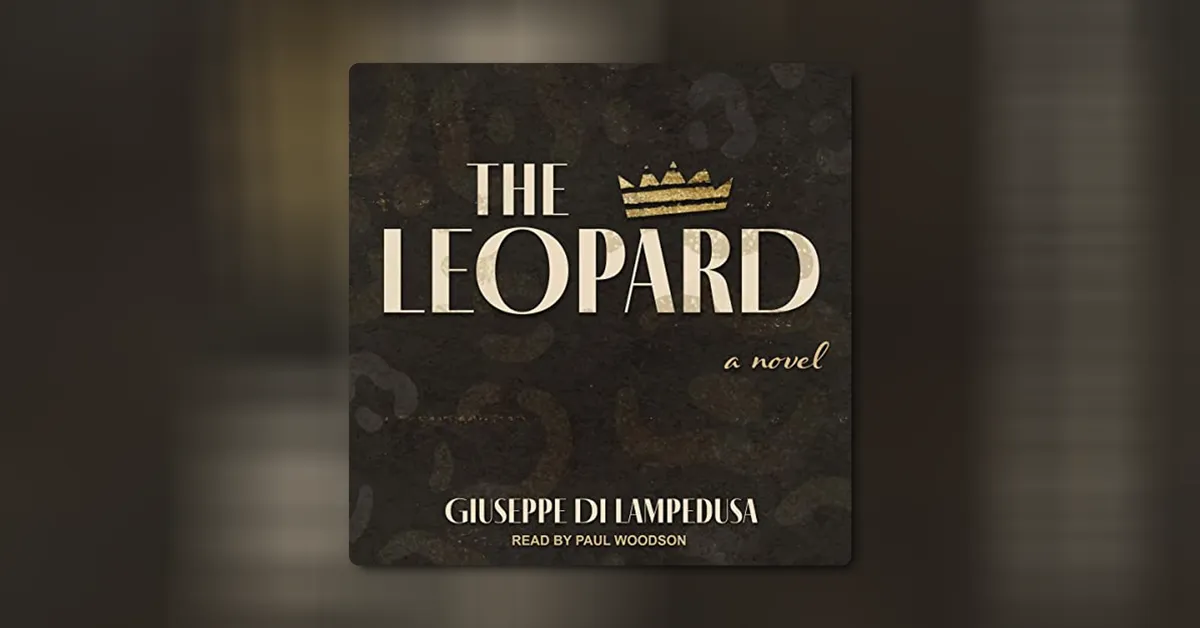
Downloads
Published
Issue
Section
License
Copyright (c) 2025 Dr. Muhammad Mubashar Nawaz, Muhammad Abbas (Author)

This work is licensed under a Creative Commons Attribution 4.0 International License.
Articles published in this journal are licensed under the Creative Commons Attribution 4.0 International License (CC BY 4.0). This license permits others to share, copy, redistribute, adapt, remix, transform, and build upon the material for any purpose, including commercial purposes, provided that appropriate credit is given to the original author(s), a link to the license is provided, and any changes made are indicated.
Authors retain copyright of their work and grant the journal the right of first publication. The full terms of the Creative Commons Attribution 4.0 International License are available at https://creativecommons.org/licenses/by/4.0/.