
اسلام اور سکھ مت میں تصورِ خدا: تقابلی جائزہ
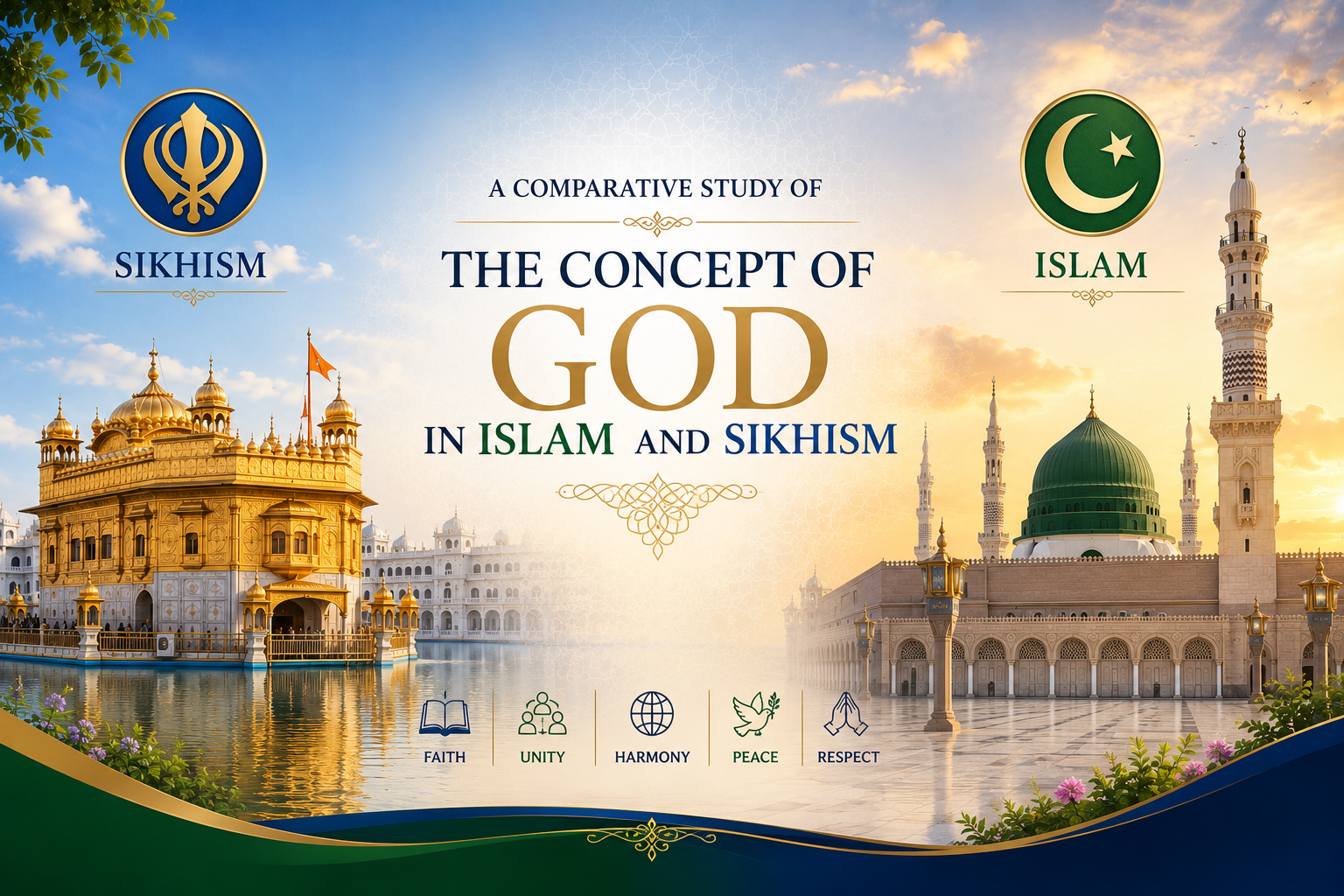
A Comparative Study of the Concept of God in Islam and Sikhism
Keywords:
Islam, Sikhism, Concept of God, Tawhid, Qur’an, Guru Granth SahibAbstract
This study presents a comparative analysis of the concept of God in Sikhism and Islam, aiming to highlight both similarities and differences in their theological foundations. In Islam, the concept of God is based on absolute monotheism (Tawhid), where Allah is regarded as One, Eternal, Self-Sufficient, Transcendent, and free from all forms of anthropomorphism. The Qur’an emphasizes God’s oneness, divine attributes, and complete distinction from creation. In Sikhism, the concept of Ik Onkar occupies a central position, representing the belief in one supreme, formless, and all-pervading reality. The Sikh scriptures, particularly the Guru Granth Sahib, describe God as both Nirgun (without attributes) and Sargun (with attributes), manifesting within creation while remaining beyond it. The study reveals that both religions reject idolatry and affirm belief in one, formless God; however, Islam strongly emphasizes divine transcendence, whereas Sikhism places greater focus on God’s immanence and presence within the universe. The comparative analysis concludes that despite shared monotheistic principles, Islam and Sikhism differ significantly in their theological interpretation and expression of the divine.
Downloads
Published
Issue
Section
License
Copyright (c) 2026 Shumaila Ali, Dr. Hafiz Mohsin Zia Qazi (Author)

This work is licensed under a Creative Commons Attribution-NonCommercial-NoDerivatives 4.0 International License.