
Tempered Reeds and Untempered Microtones: The Impact of Equal Temperament on Shruti Preservation in Oral Harmonized Traditions
DOI:
https://doi.org/10.68024/g7jd8m46Keywords:
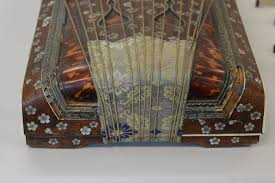
Equal Temperament, Gamak, Harmonium, MicrotonalityAbstract
This study investigates how 12-tone equal temperament (12-TET) harmonium accompaniment influences microtonal pitch variation in South Asian oral vocal traditions, particularly the flexibility associated with Shruti. A quantitative repeated-measures design was employed involving 40 vocalists experienced in South Asian music. Participants performed sustained notes, meend (gliding pitch transitions), and gamak (ornamental oscillations) under two accompaniment conditions: a fixed-pitch 12-TET harmonium and a continuous-pitch reference. Audio recordings were analyzed using fundamental frequency (F₀) measurements, expressed in cents, to determine pitch deviation, pitch-range width, and pitch-within-contour variation (PWC). The findings revealed a substantial reduction in microtonal flexibility during harmonium accompaniment. Overall mean absolute deviation (MAD) decreased from 31.84 cents under the continuous-pitch condition to 18.27 cents with the harmonium, representing a 42.62% reduction. Paired-samples analysis confirmed that this difference was statistically significant, t(39) = 10.84, p < .001, d = 1.71. Significant differences were also observed across sustained notes, meend/glissando transitions, and gamak ornamentation. Repeated-measures analysis of variance identified significant main effects of accompaniment condition, F(1,39) = 46.82, p < .001, partial η² = .546, and musical task, F(2,78) = 31.64, p < .001, partial η² = .448. A significant interaction between accompaniment and musical task was also established, F(2,78) = 12.57, p < .001, partial η² = .244.These results demonstrate that fixed-pitch accompaniment can constrain microtonal pitch variation and influence tonal coordination in oral performance practices. The study highlights the importance of acoustic measurement and digital documentation for preserving subtle pitch characteristics and expressive nuances within South Asian musical heritage.
Downloads
Published
Issue
Section
License
Copyright (c) 2025 Drishti Devi Dinani (Author)

This work is licensed under a Creative Commons Attribution 4.0 International License.
Articles published in this journal are licensed under the Creative Commons Attribution 4.0 International License (CC BY 4.0). This license permits others to share, copy, redistribute, adapt, remix, transform, and build upon the material for any purpose, including commercial purposes, provided that appropriate credit is given to the original author(s), a link to the license is provided, and any changes made are indicated.
Authors retain copyright of their work and grant the journal the right of first publication. The full terms of the Creative Commons Attribution 4.0 International License are available at https://creativecommons.org/licenses/by/4.0/.